


The 2025 member survey: The income and employment situation of visual artists and challenges with unemployment security
The Artists’ Association of Finland carried out an anonymous online survey in June 2025 to obtain up-to-date information on professional visual artists’ income and employment and to collect their experiences of challenges associated with the social security system.
The results confirm the findings of studies conducted by the Artists’ Association and other institutions such as Cupore – the Center for Cultural Policy Research – that professional visual artists’ often experience irregular work and depend on multiple sources of income, while the practices and systems of the social security services do not recognise the special characteristics of their profession. The member survey provides additional insights into the various sources of artists’ income and the financial realities of their daily lives.
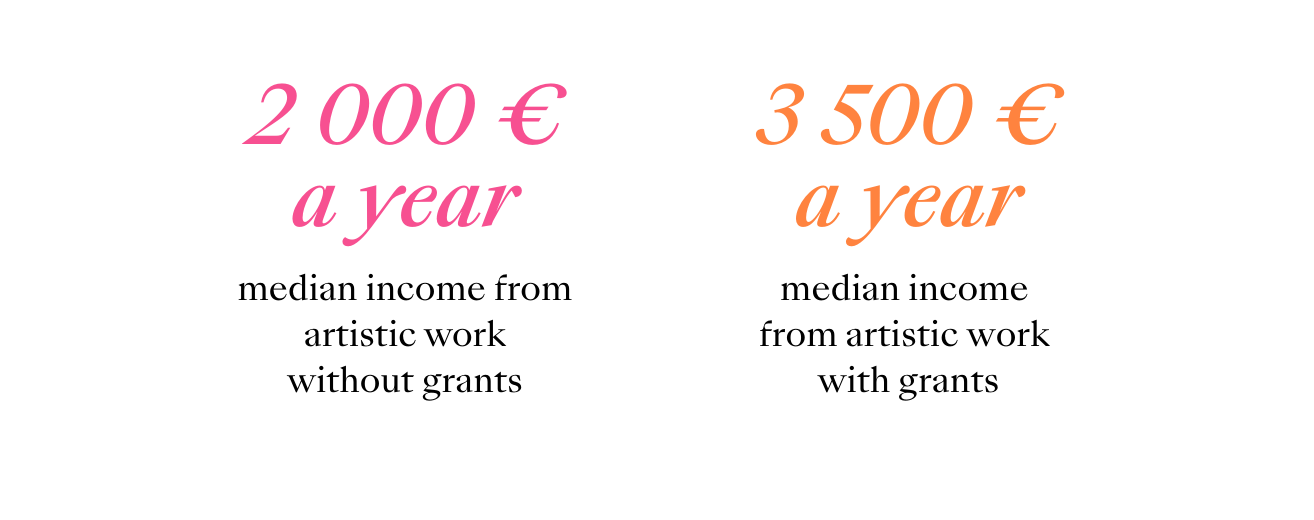
“Excluding grants, respondents’ median income from artistic activities is only EUR 2,000 a year. The survey shows that many professional visual artists live in uncertainty and experience day-to-day concerns over their livelihoods, especially during periods of unemployment", says Annukka Vähäsöyrinki, Director of the Artists’ Association of Finland.
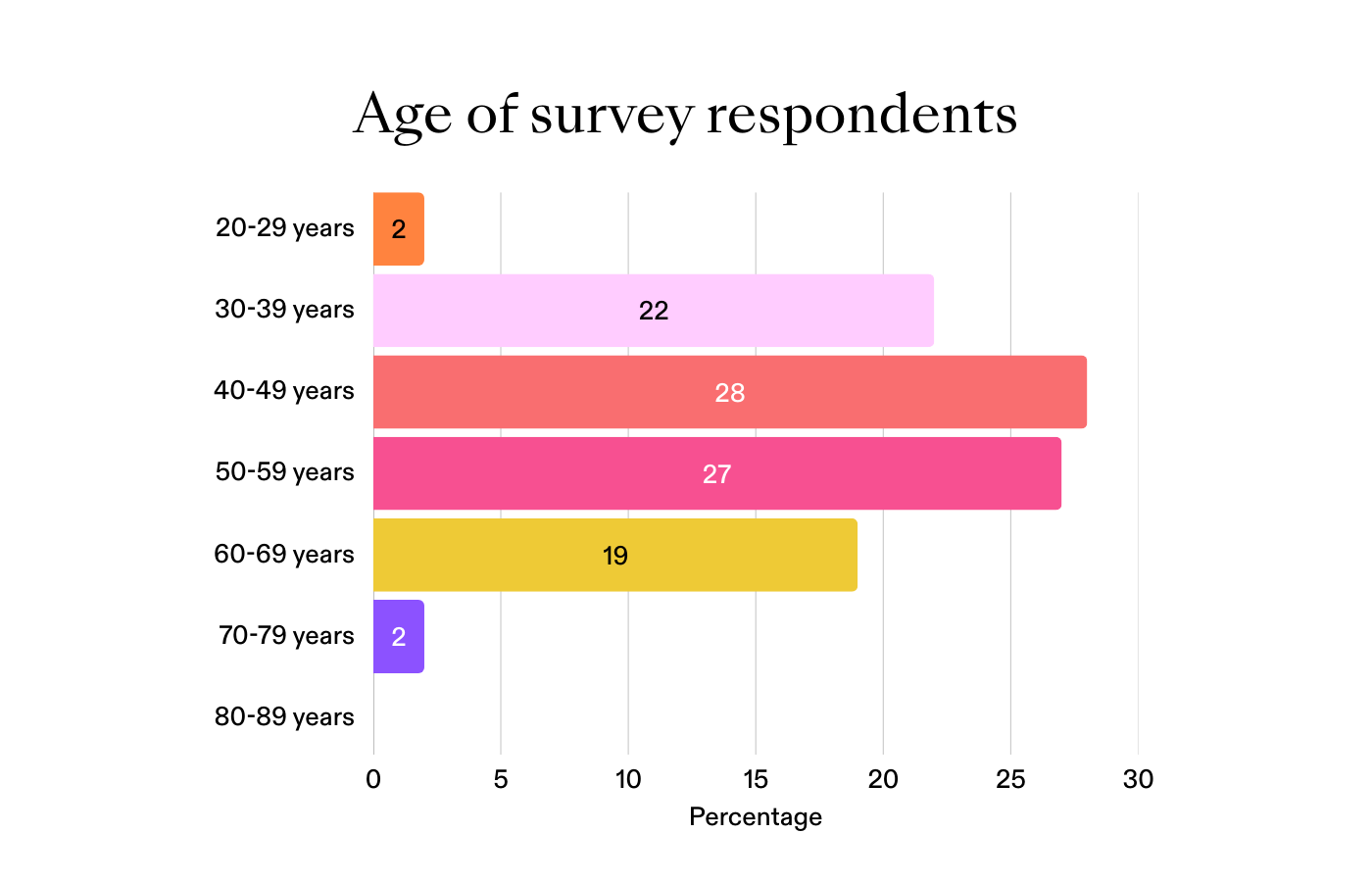
A total of 329 responded to the questionnaire, 316 in Finnish and 13 in English. Overall, 88% of respondents are registered with a member association of the Artists’ Association of Finland.In terms of age, 2% of respondents were under 29 years of age, 50% were aged 30–49, 46% were aged 50–69 and 2% were over 70.
Artists and the organisation of artistic work
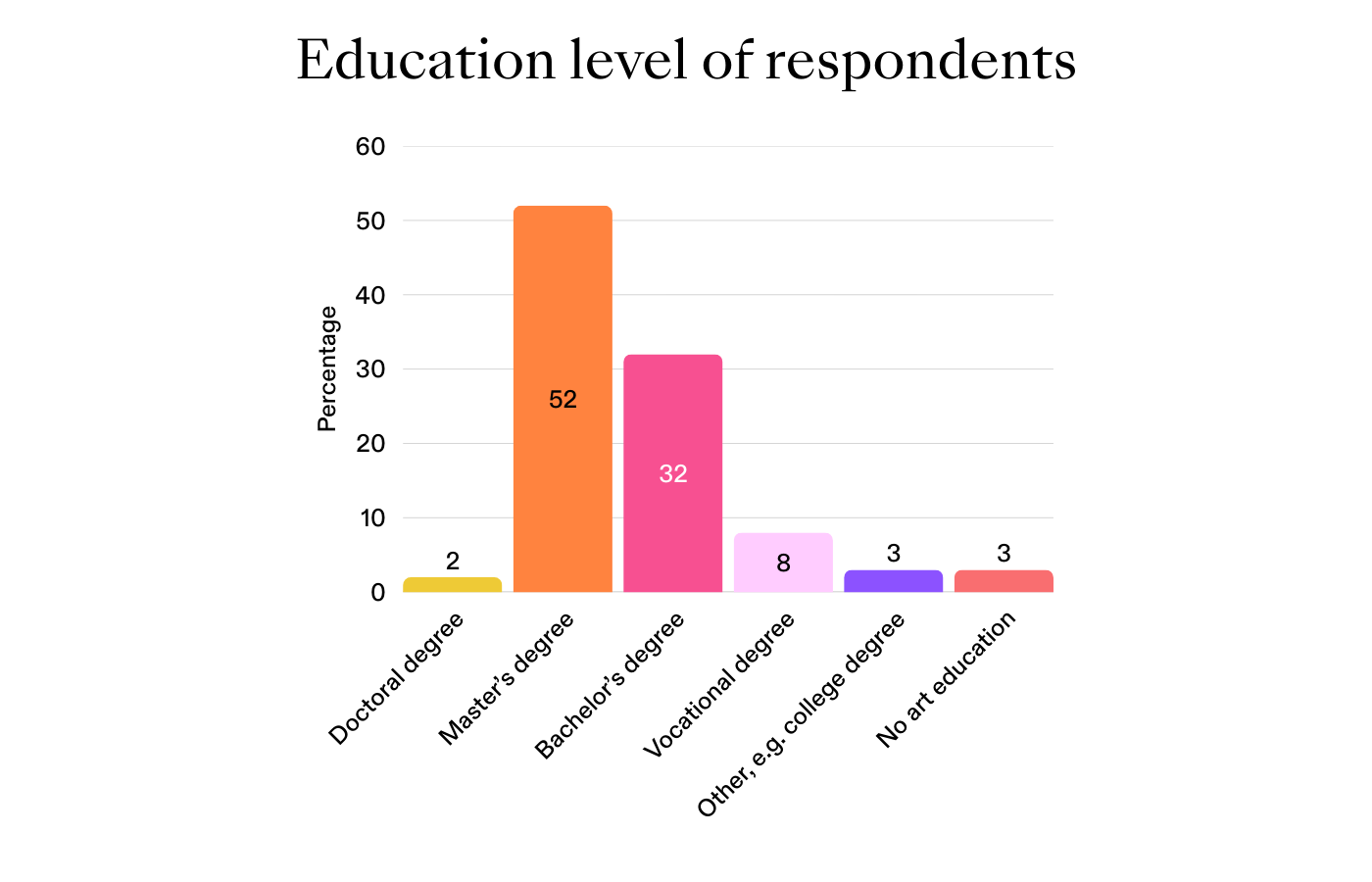
Professionals within the field of visual arts are highly educated in Finland. Of the respondents, 86% hold at least a bachelor’s degree (Bachelor or AMK) in the field of arts, of whom 52% have a master’s degree (Master or YAMK) and just under 2% a doctoral degree. 8% have a vocational degree and just under 3% have another type of qualification, such as a college degree. However, a high level of education does not directly translate to a stable income or employment opportunities for visual artists.
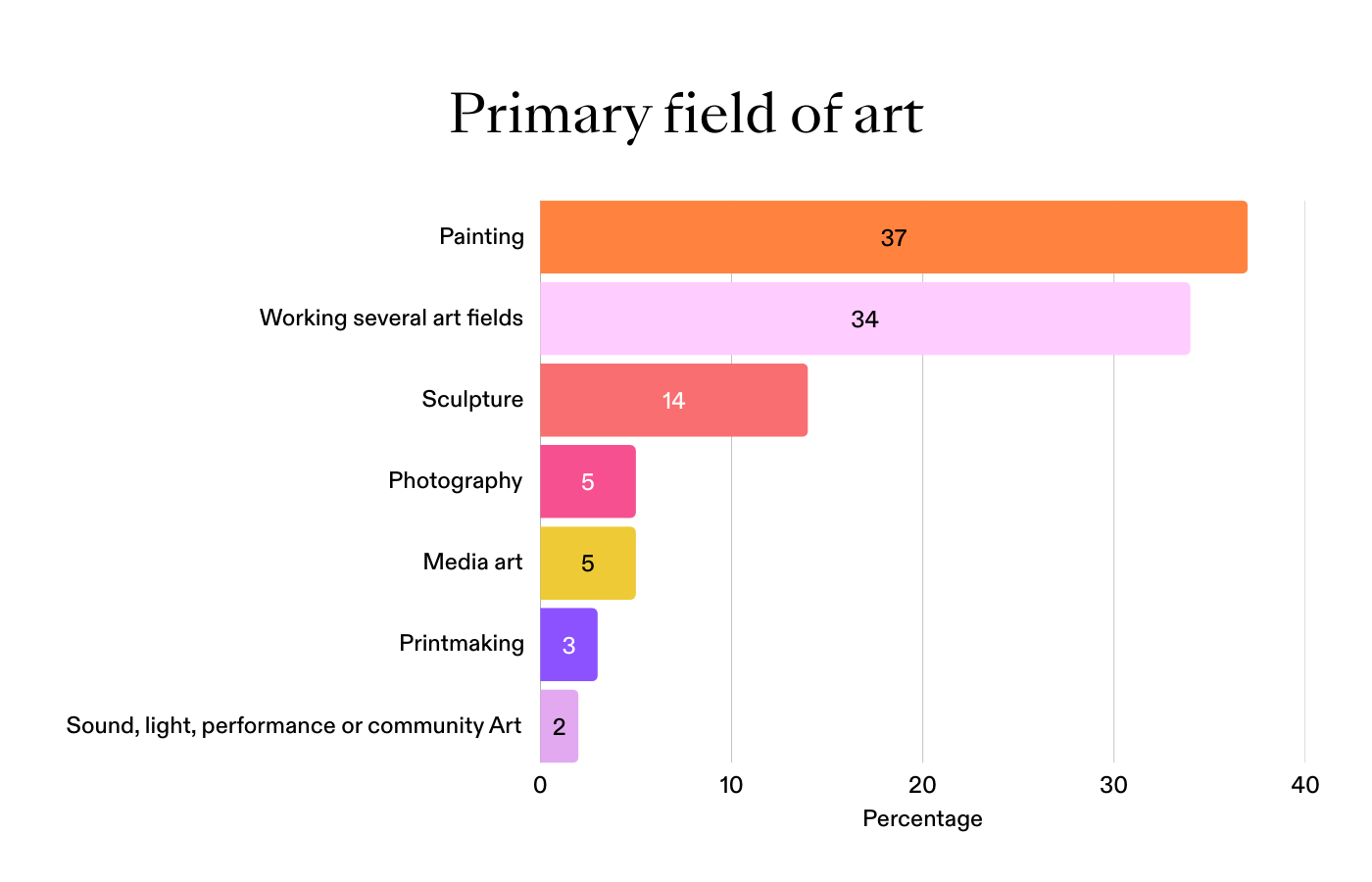
Among the respondents, 37% reported painting as their primary field of art, while 34% reported being multidisciplinary artists or working in several fields of art.
Collectively, visual artists are characterised by diverse working practices. Many artists derive their income from a combination of paid employment, self-employment and grants, for example. Approximately a third of the respondents have a business ID, although only a small proportion operate as actual entrepreneurs. In 2025, 18% of respondents were registered for VAT and 11% had a pension insurance for the self-employed (YEL insurance). However, many artists who have a business ID earn less than the annual VAT threshold, which is an indication of low levels of sales income.
Income
The member survey shows that the most significant sources of income for artists are activities that do not involve artistic work. 61% of respondents reported receiving income other than from their artistic work. Income from artistic work is derived particularly from grants, sales of works, teaching and commissioned works.
The results are in line with the findings in the study by Cupore, As an artist in Finland: Professional artists in Finland in 2019 on artists’ income structures. Similarly, The Arts and Culture Barometer 2023 (in Finnish) shows that many artists perform other jobs alongside their artistic work or to finance their artistic activities.
Excluding grants and artist pensions, the median gross income for visual artists from artistic work was only EUR 2,000 a year – or just EUR 167 a month. Including grants, the median income was EUR 3,500 a year (EUR 290/month). Of the respondents over the age of 60, 19% received an artist pension, with the average pension being EUR 9,160 a year. These results show that the majority of respondents cannot make a living from their profession.
Financial insecurity is evident in the survey data in many ways. As many as 55% of the respondents are very dissatisfied or somewhat dissatisfied with the income from their artistic activities, while just over a quarter (27%) are satisfied and a further 15% say they are somewhere in between. The group that are the most satisfied with the income derived from their artistic activities is sculptors (50%), which may be explained by the relatively high number of commissions for works of public art.
Grants and sales of works: important but uncertain sources of income
Grants play a central role for visual artists, serving as a prerequisite for their artistic work and livelihoods as well as the creation of diverse works of art. Grants are one of the most significant sources of income for survey respondents.
A third of the respondents had received a working grant or a public display grant in 2024. The statistics show, however, that the proportion of visual artists working on grants is not actually this high. The survey was therefore particularly popular among professional artists who received grants in 2024.
The median value of working grants awarded to respondents was EUR 13,000. The smallest grant awarded to a respondent in 2024 was EUR 800 and the largest EUR 45,000.
Grants are important for visual artists, but they are very difficult to obtain. For example, among the grants awarded by the Arts Promotion Centre Finland, artist grants receive the highest number of applications – only about 5% of grant applications for 2025 were successful.
Sales of works generate some income for 64% of respondents, but the level and volume of sales vary significantly. The weak economic situation in recent years has reduced households’ purchasing power, which is directly reflected in the declining number of sales. Frame Finland's Visual arts statistics 2024 show a clear decline in sales reported by galleries.
A fifth of respondents were paid exhibition fees and more than a quarter received royalties. The average exhibition fee received was EUR 913 and the average income from royalties was EUR 485.
Public art and commissioned works as a source of artists’ income
Public art projects provide artists with significant work opportunities, enabling them to create long-term, accessible works that engage communities. In 2024, 16% of respondents received income from public art commissions or other commissioned works. The average income from commissioned works was EUR 11,000, representing a significant proportion of the annual earnings of the artists who made public art.
Public art projects are perceived as financially significant. A survey conducted by Katri Salmenoja, Julkisen taiteen teokset, palkkiot ja prosessit 2021 (in Finnish), shows that artists generally consider fees paid for public art important. According to Salmenoja’s survey, income from public art projects typically account for approximately half of an artist’s total annual income. The Artists’ Association of Finland has carried out long-term advocacy work for establishing and increasing the scope of funding for public art (the Percent for Art principle).
Artists are burdened by the difficult process of accessing unemployment benefits
One of the most obvious and worrying findings of the survey concerns challenges related to unemployment security. Almost 44% of respondents chose not to apply for unemployment benefits they might have been entitled to. Key reasons included the complexity of the system, lengthy processes, inconsistent interpretations by authorities and fear of retroactive recovery of benefits.
The responses indicate that the specific characteristics and realities of artists’ profession are insufficiently recognised in the decision-making process. The system does not adequately account for work that consists of short periods of employment and multiple small commissions and streams of income. The requirement to seek a full-time job is ill-suited to a sector in which such positions are scarce and full-time employment is typically comprised of several part-time jobs. Unclear procedures and misleading instructions provided by employment services lead to unreasonable outcomes and even the loss of job opportunities.
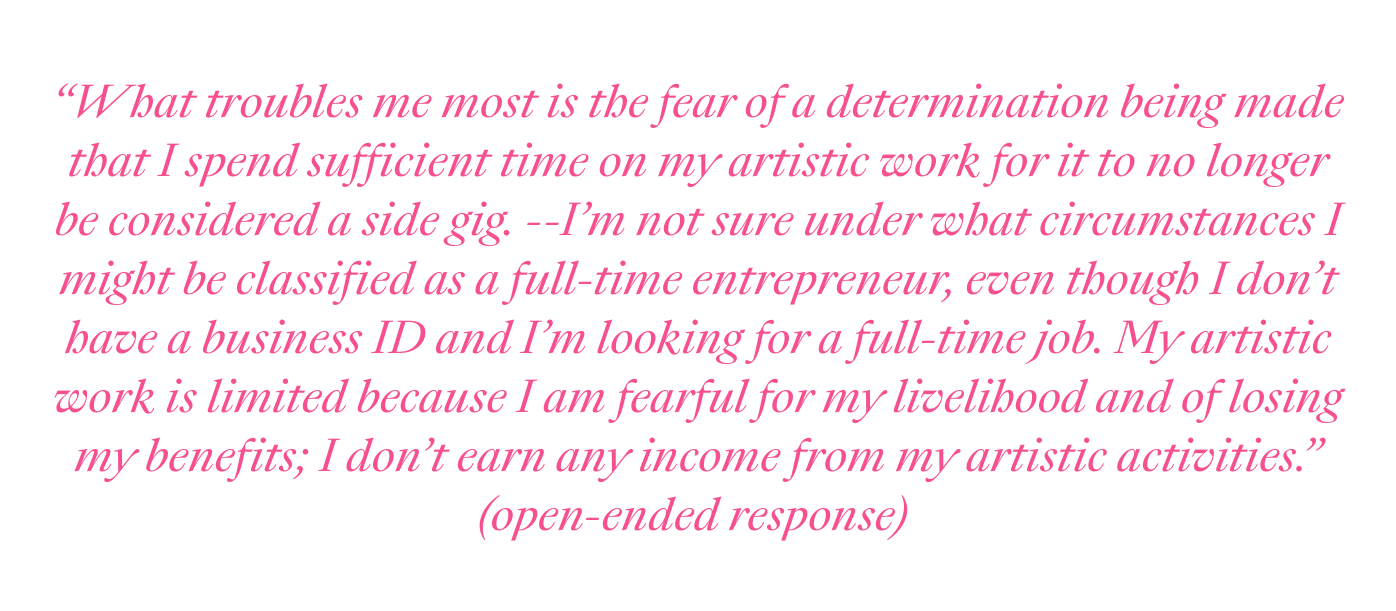
Open-ended responses describe the system as tedious and difficult to understand. Some respondents said that they found themselves in a very difficult situation because they were interpreted as being an entrepreneur on the basis of their artistic work, even if their income was very low and uncertain. Starting a business is often seen as a risk by visual artists. Maintaining one's professional skills and profile during a period of unemployment can be misinterpreted as full-time entrepreneurship by the employment services. Navigating the system restricts artistic work and creativity.
For artists with an immigrant background, challenges related to unemployment security are more broadly linked to tightening immigration policies and the consequent uncertainties. Artists may avoid applying for unemployment benefits because receiving benefits might affect future applications for a residence permit or citizenship.
Towards a predictable and reliable unemployment security system
The results of the member survey show that the social security system and visual artists’ income structures require systematic development. Distrust of employment authorities has led to under-utilisation of benefits among this group of professionals, whose average income and bargaining position are already weak. The precarious nature of the work is why it is essential to strengthen artists’ trust in the unemployment security system and to create practices that support the work of professional artists.
Unemployment security needs to be developed so that the system supports job-seeking activities in ways that are appropriate to the arts sector. It needs to be ensured that people who combine entrepreneurship, salaried work, and other income have a genuine opportunity to access unemployment security. Entrepreneurial activity should be interpreted as secondary when the artist's activities demonstrate an intention to earn a living through salaried work and grants rather than sales.
The aim should be for artists to find full-time employment, not a single full-time job. Authorities’ understanding of artists’ work must be improved, and their decisions must be fair, consistent and predictable. Authorities should refrain from retrospectively reviewing entitlement to unemployment benefits in cases in which an artist has followed the instructions provided.
The Artists’ Association of Finland promotes the status of visual artists
The objective of the Artists’ Association of Finland is to enforce and promote the status of visual arts, the working conditions of visual artists and the importance of the arts in society. Our aim is to ensure that professional artists can earn a living from their artistic work, and that the social security system and the structures of the visual arts sector support artists’ income development. We pursue these goals through active advocacy and policy work.
In addition to the need to develop the unemployment security system, it is the position of the Artists’ Association of Finland that long-term measures are needed to improve the conditions for artistic work.
To achieve these goals, the Association suggests:
- the level of artist grants be increased to closer align with the median income in Finland
- the coverage of the exhibition fee system be extended
- contract-based job opportunities be created for visual artists
- funding for public art be increased and the Percent for Art principle enforced
For more information please contact:
Melissa Ahlberg
Communication and Advocacy Specialist
melissa.ahlberg@artists.fi, p. 050 553 2865
Suomen Taiteilijaseura on kuvataiteen vaikuttaja- ja asiantuntijaorganisaatio, joka edustaa yli 3 000 kuvataiteilijaa. Edistämme kuvataiteilijoiden asemaa ja työskentelyedellytyksiä sekä vahvistamme kuvataiteen merkitystä yhteiskunnassa.